Los Angeles is a car city. Everyone says it and mostly they're right. But on the Westside, there are neighborhoods where you can genuinely walk to dinner, bike to the beach, and handle your weekly errands without getting behind the wheel.
This isn't about giving up your car entirely. It's about choosing a neighborhood where you don't need it for every single trip. Here's how the Westside's most walkable neighborhoods stack up.
Santa Monica - Walk Score 93, Bike Score 96
Santa Monica sets the bar for walkability on the Westside. A Walk Score of 93 puts it in "Walker's Paradise" territory, and a Bike Score of 96 is among the highest in all of Los Angeles.
Third Street Promenade and Montana Avenue give you car-free shopping and dining corridors. Main Street through Ocean Park has groceries, coffee, restaurants, and retail within a compact stretch. The Metro E Line connects downtown Santa Monica to Culver City and DTLA, and the beach bike path runs the full length of the city.
The trade-off is price. Santa Monica's median single-family home price sits well above $2.5M, and even condos start in the $700Ks for a one-bedroom. But if walkability is your top priority and the budget allows, nothing on the Westside competes.
Downtown Culver City - Walk Score 90, Bike Score 72
Downtown Culver City is the Westside's walkability sleeper. A Walk Score of 90 puts it just behind Santa Monica, and in some ways the day-to-day experience is better - it's more compact, less touristy, and everything is concentrated along a few walkable blocks.
Washington Boulevard and Culver Boulevard converge in a downtown core packed with restaurants, bars, the Kirk Douglas Theatre, boutique retail, and the Culver Steps development that brought Amazon Studios to the area. The Metro E Line has a stop right in downtown. A growing network of protected bike lanes connects Culver City to the Ballona Creek bike path and out to the beach.
Homes in walkable downtown Culver City range from condos in the $600Ks to single-family homes in the $1.5M–$2.5M range. For buyers who want a walkable urban village feel at a lower price point than Santa Monica, this is the pocket to look at.
Venice - Walk Score 83, Bike Score 86
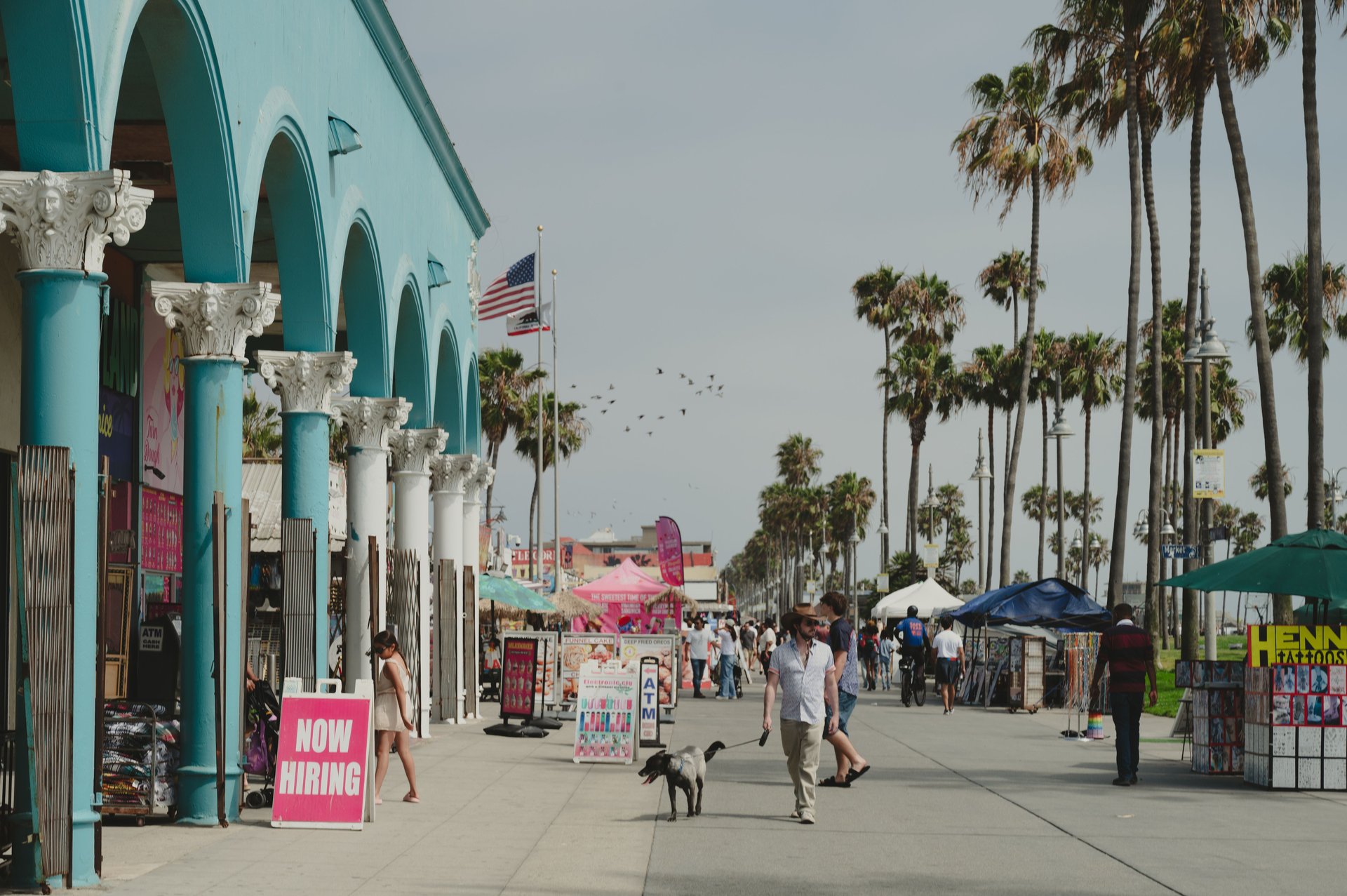
Venice is the neighborhood where walkability meets character. A Walk Score of 83 and Bike Score of 86 reflect what residents already know - you can walk to the beach, walk to Abbot Kinney, bike to the marina, and handle most of your week without a car.
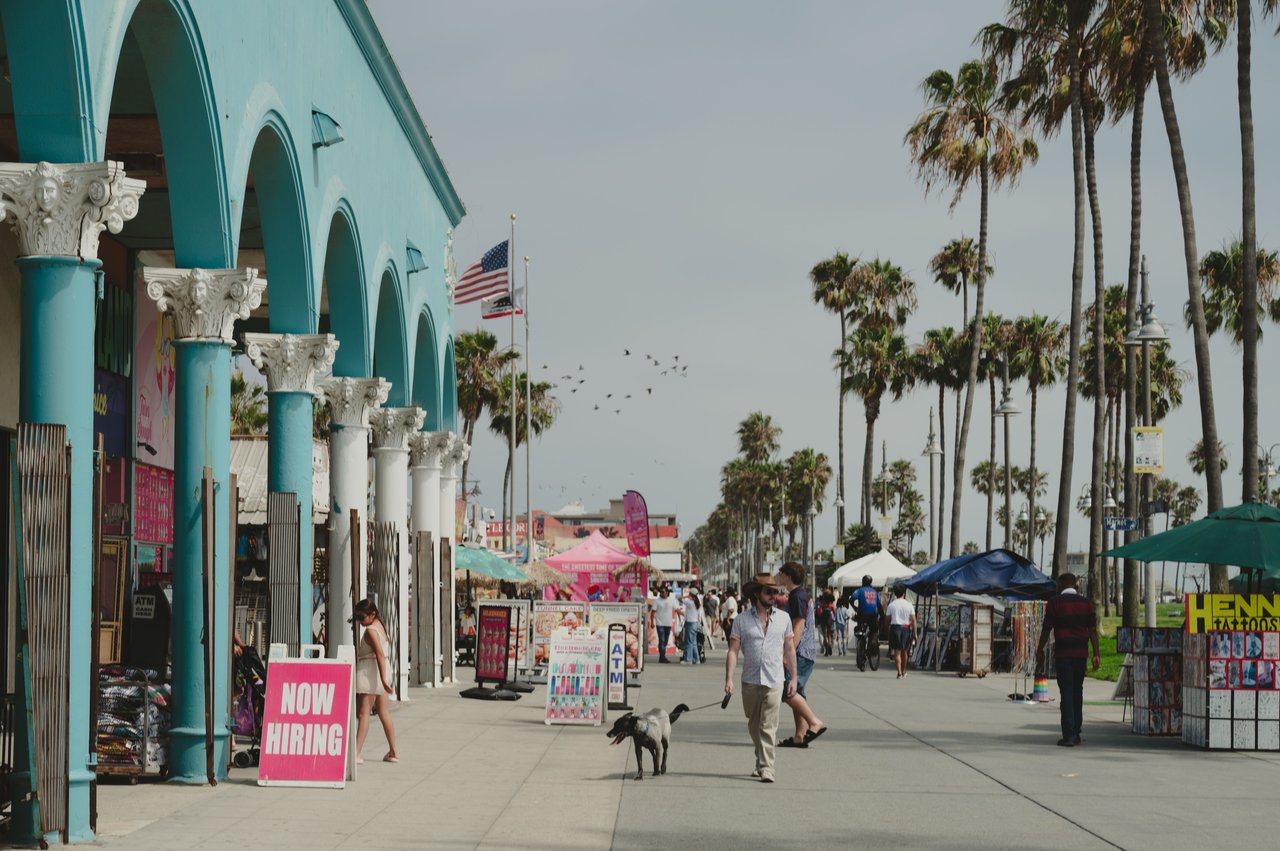
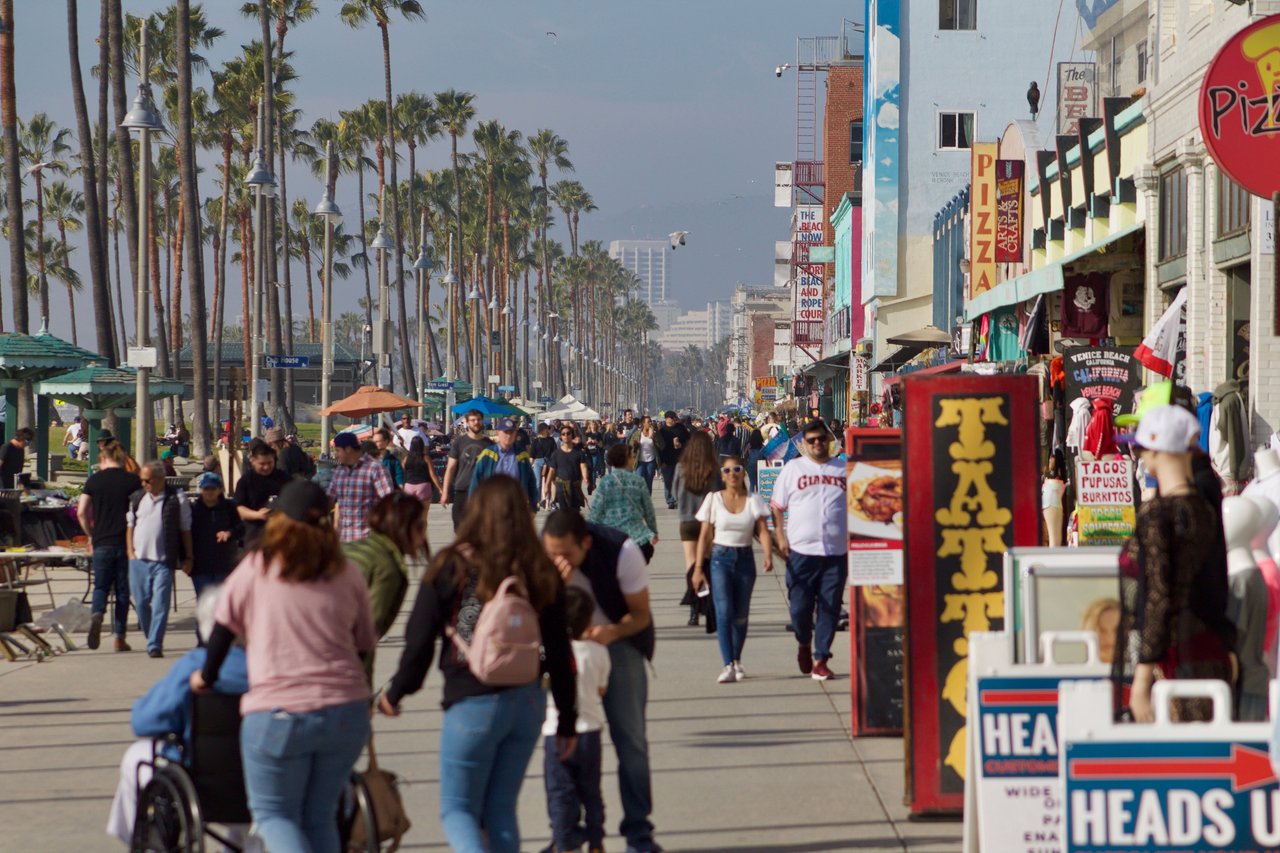
The southern end of Abbot Kinney Boulevard is the retail and dining anchor, with Rose Avenue adding a more low-key stretch of coffee shops and restaurants. The Venice Beach boardwalk and bike path run along the coast. Grocery options include Whole Foods on Lincoln and several smaller markets within walking distance of most Venice addresses, along with a Trader Joe's coming soon!
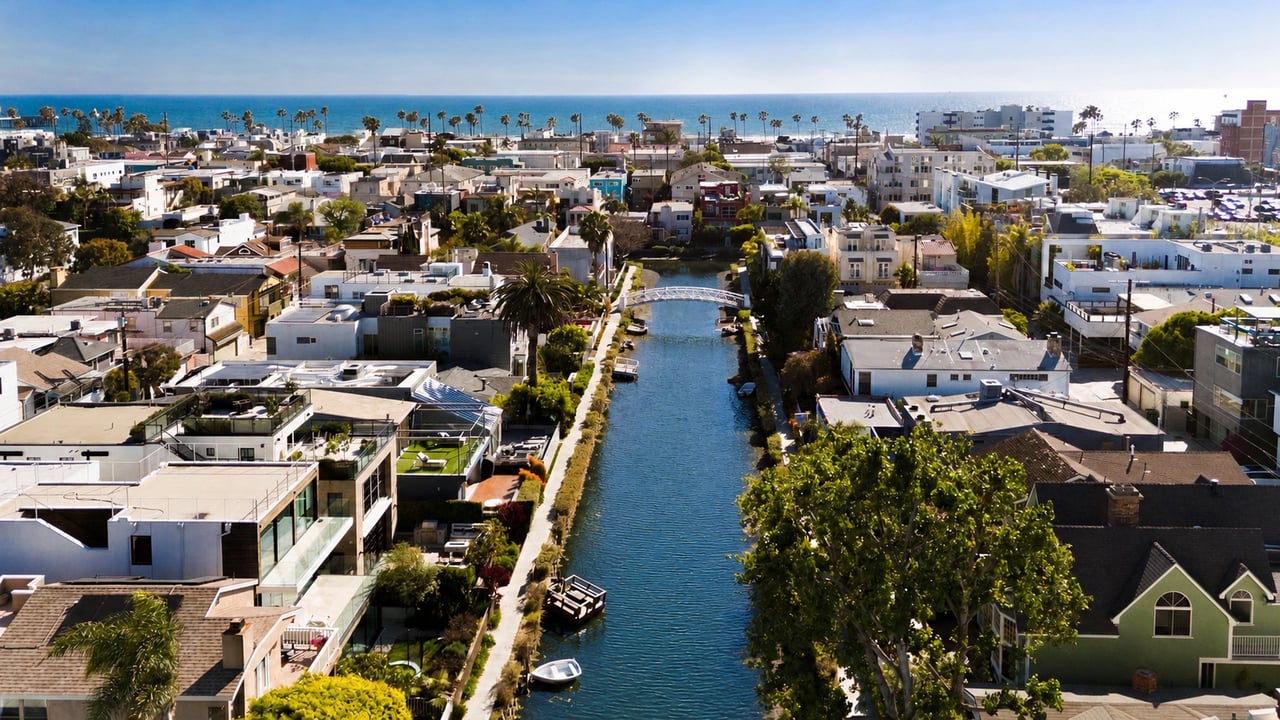
Venice's walkability varies block by block. The Walk Streets near the beach are among the most pedestrian-friendly streets in all of LA, literally car-free. The Canals offer a quieter, walkable pocket. Inland Venice around Superba Avenue and Electric Avenue feels more residential but still benefits from the overall connectivity.
Home prices in Venice range from the high $1Ms for smaller properties to $4M+ for larger homes, with Walk Street and canal-adjacent homes commanding the highest premiums. And with Soho House opening here in 2027 you will never need to leave!
Playa Vista - Walk Score 73, Bike Score 82
Playa Vista's Walk Score of 73 understates the experience. This is a master-planned community designed from the ground up for walkability, something almost no other Westside neighborhood can claim. And a Bike Score of 82 reflects the well-connected cycling infrastructure linking Playa Vista to the coast and neighboring areas.
Runway at Playa Vista is the retail hub: Whole Foods, Cinemark movie theater, restaurants, fitness studios, and shops all within a walkable open-air center. Nearly 30 parks covering about 47 acres are woven through the community, with most homes within a short walk of green space.
For tech workers, the walkability extends to their commute - Google, YouTube, Meta, Electronic Arts, and Microsoft offices are all within or adjacent to Playa Vista. Walking or biking to work isn't aspirational here, it's normal.
Condos and townhomes in Playa Vista range from the mid-$600Ks to $1.5M, with single-family homes from $1.8M to $3M+. The HOA-maintained streetscapes and community amenities contribute to a polished, walkable feel that's distinctly different from the organic walkability of Venice or Santa Monica.
Mar Vista - Walk Score 75, Bike Score 76
Mar Vista is an emerging walkable neighborhood. A Walk Score of 75 reflects the reality that some pockets are very walkable while others still feel suburban. A Bike Score of 76 helps - the Ballona Creek path and protected bike lanes make cycling a practical option for getting around.
The walkable core runs along Venice Boulevard and Centinela Avenue, where you'll find a growing restaurant scene, coffee shops, and the Sunday farmers market on Grandview Boulevard. Bike infrastructure is expanding, with the Ballona Creek path accessible from the southern end of the neighborhood and protected bike lanes connecting to Culver City and Venice.
What draws walkability-minded buyers to Mar Vista is the combination of that emerging neighborhood feel with more space. Single-family homes here sit on larger lots than you'll find in Venice or Santa Monica, with prices typically in the $1.5M to $3M+ range. The neighborhood is changing fast - new restaurants, better bike infrastructure, and a growing sense of community identity make it one to watch.
Marina del Rey - Walk Score 68, Bike Score 83
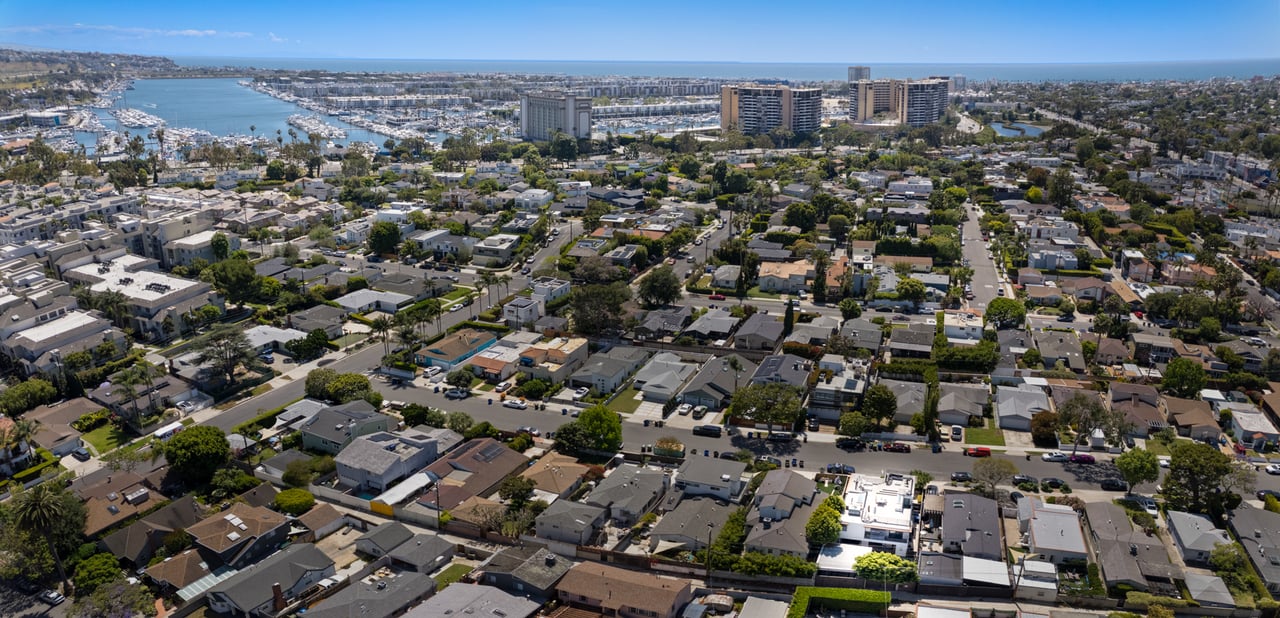
Marina del Rey's overall Walk Score of 68 is modest, but its Bike Score of 83 tells a different story. This is a neighborhood where biking often makes more sense than walking. The Marvin Braude Bike Trail runs along the coast and connects to the Ballona Creek path, giving residents a car-free route from the marina to the beach, Playa Vista, and beyond.
Walkability varies significantly by location. Admiralty Way near Waterside and the Boardwalk Shops offers a concentration of dining, shopping, and services within walking distance of nearby condo buildings. The Oxford Triangle, tucked between the marina and Venice, has Walk Scores in the low-to-high 80s - among the highest in the area.
For buyers who prioritize biking and outdoor lifestyle over traditional walkability, Marina del Rey offers a unique combination of waterfront living and car-light transportation options.
The Bike Factor
Any conversation about going car-light on the Westside has to include biking. The Marvin Braude Bike Trail runs 22 miles along the coast from Pacific Palisades to Torrance. The Ballona Creek Bike Path connects Marina del Rey and Playa Vista to Culver City. Protected bike lanes are expanding along Venice Boulevard, Culver Boulevard, and through Playa Vista.
A neighborhood with a Walk Score of 72 and a Bike Score of 85+ can feel just as car-optional in practice as one with a Walk Score of 85, it just depends on whether you're willing to ride. For many Westside buyers, especially those coming from denser cities, the bike infrastructure is what tips a neighborhood from "car-dependent" to "car-light."
Does Walkability Affect Home Prices?
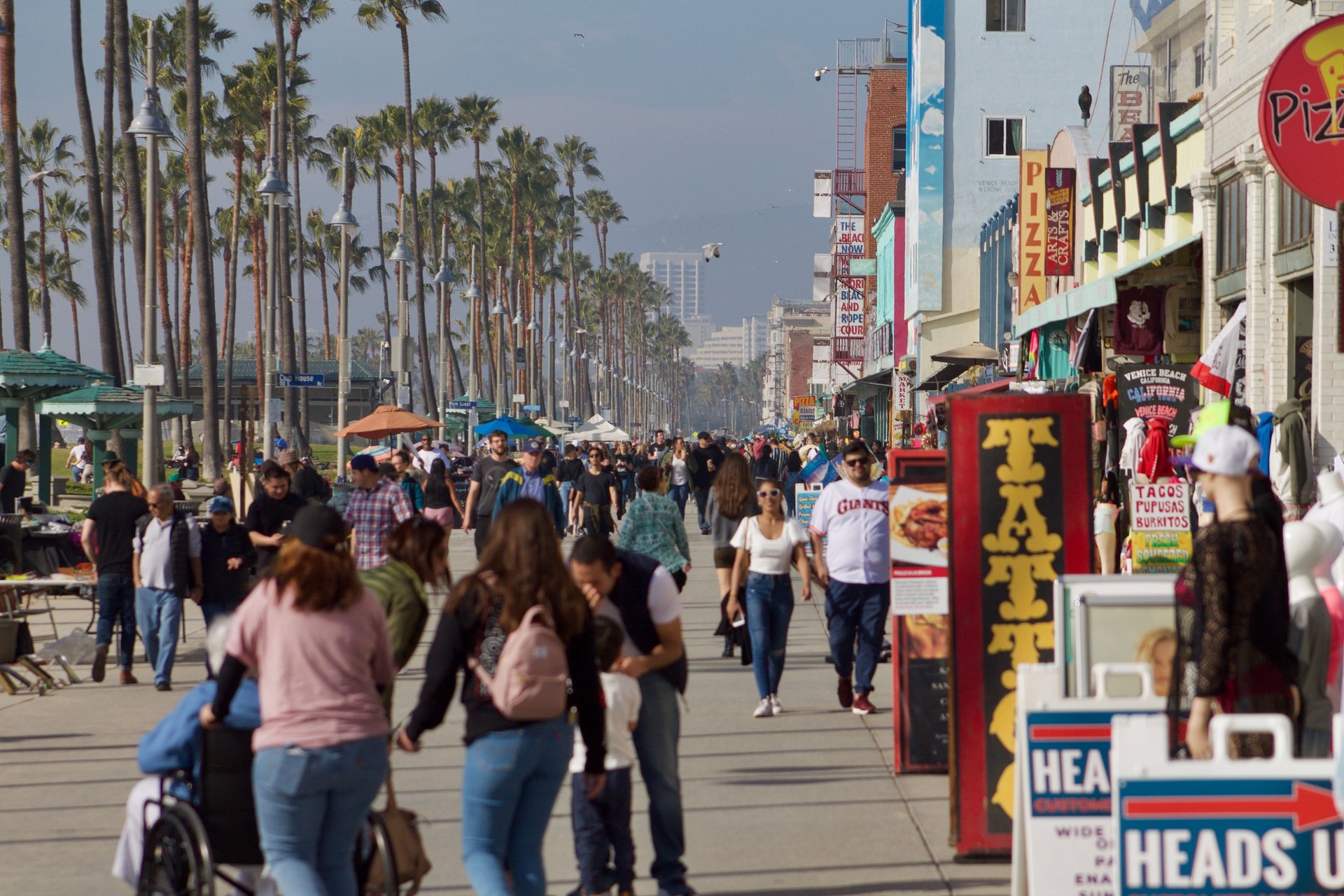
Research consistently shows that homes in walkable neighborhoods command a premium, and on the Westside, the pattern holds. The most walkable neighborhoods (Santa Monica, Venice, downtown Culver City) also tend to be the most expensive, though it's difficult to separate walkability from the other factors that drive pricing in those areas.
What's more useful for buyers is this: within a neighborhood, walkability can vary block by block. A home three blocks closer to Abbot Kinney, the Culver City metro stop, or Montana Avenue can have a meaningfully different Walk Score, and a meaningfully different price, from one just slightly further out. It's worth paying attention to.
Frequently Asked Questions
What is the most walkable neighborhood on the Westside of Los Angeles?
Santa Monica, with a Walk Score of 93 and Bike Score of 96. Downtown Culver City is a close second at 90.
Can you live without a car on the Westside?
In Santa Monica, downtown Culver City, and parts of Venice, yes, especially if you bike. Most other Westside neighborhoods are better described as "car-light" rather than fully car-free.
Where can I get the most space in a walkable Westside neighborhood?
Mar Vista offers larger lots and more square footage than Venice or Santa Monica generally at a lower price per square foot. For condos, downtown Culver City has options starting in the $600Ks with strong walkability. The trade-off is that neither neighborhood matches the top-tier Walk Scores of Santa Monica or Venice.
Does the Metro E Line improve walkability on the Westside?
Yes. The E Line connects downtown Santa Monica to Culver City, Palms, and DTLA. Neighborhoods near E Line stations, particularly downtown Culver City and the Expo/Bundy area, benefit from both walkability and transit access.
What is a good Walk Score for buying a home?
A Walk Score of 70+ means "Very Walkable" - most errands can be done on foot. Above 90 is "Walker's Paradise." On the Westside, anything above 75 with a strong Bike Score typically means you can go car-light.
Thinking about buying in a walkable Westside neighborhood? I'd love to help you find the right pocket - reach out anytime!
Bianca Boey is Associate Director of The Grady Group at The Agency, a top-producing Westside LA team with $900M+ in career sales. Contact the team at 213-551-7844 or visit grady-group.com